
By Ryan McClay and Suzanne Fani, November 18, 2026
First responder and military grief has been especially palpable this year after so many losses among police, EMS, fire, RCMP and military service members. A recent presentation on Treating Traumatic Grief by the Enhancing Trauma Treatment Institute shared some effective approaches to treating trauma and traumatic grief.
A first responder has lost a close peer in the worst possible way: at work. It was a sudden, violent and deeply shocking death. The first responder does what most of us are taught to do: keep it together, keep moving, get through it.
Then everyone seems to want the details. Their questions are straight to the point: How did it happen? How long did you work together? Were you close? Memories are stirred up and unfold in the mind. It could be about how they met, a trip they took, or a silly inside joke once shared with their group of friends. The first responder shuts down; not because they don’t care, but because they care so much that every memory now comes with a gut punch. The good times and the worst day have fused into one thing, and they’d rather not touch any of it.
If that sounds familiar, you’re not broken. You’re dealing with something clinicians call traumatic grief, and it works differently than the grief most people expect.
Grief Versus Traumatic Grief: Not the Same Thing
Ordinary grief hurts, but it’s a natural process. Your body has an immune system and so does your mind. Resolving loss is a part of that natural process but it still takes work: sharing the loss as a social rite of passage, ritualizing the passing to establish meaning and purpose, and adjusting to the presence of loss as we move forward in our lives.
At the recent Treating Traumatic Grief presentation, the opening point was that grief is not a disorder. Most people find a way to carry a loss and keep living as they adjust and adapt to their new worlds. There’s no timeline.
As one presenter put it, “Grief is the price you pay for love. But how many losses do you have to carry?”
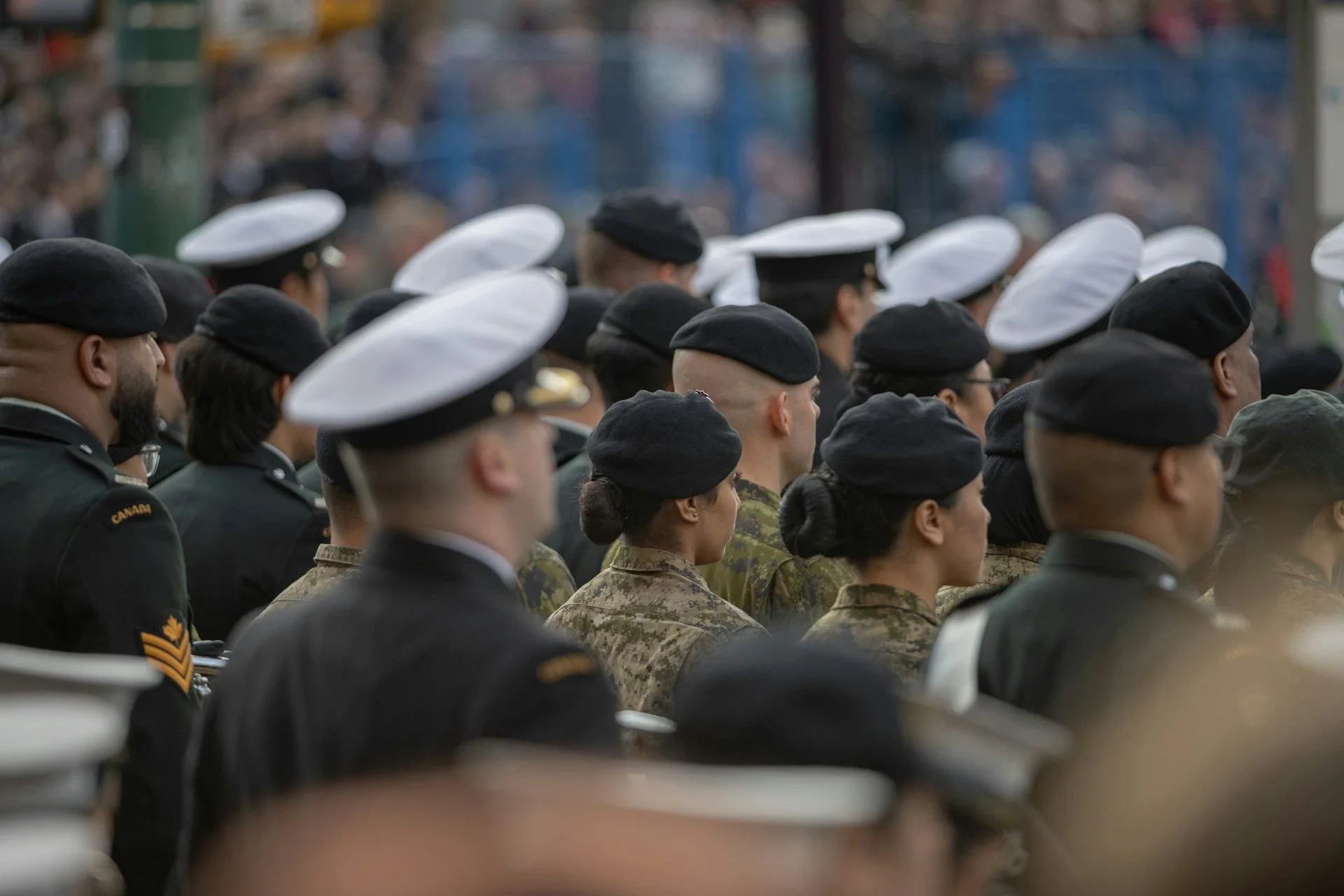
This kind of grief was palpable at the 49th Annual Canadian Police and Peace Officers' National Memorial on Sunday, September 27, 2026, on Parliament Hill in Ottawa, where they commemorated fallen officers and peace officers who lost their lives in the line of duty in 2026. The grief was especially felt after so many losses of service members in that year. The cumulative impact of social costs on other frontline services like EMS, Fire and RCMP has been acute as well.
The recent presentation on Treating Traumatic Grief gave some important approaches for anyone dealing with heavy losses like these.
First, What Is Traumatic Grief?
Traumatic grief is different. It’s what happens when intense grief combines with traumatic stress after a violent, sudden, or unnatural death. You can’t have it without the loss, but it isn’t only the loss. Your brain files the death under danger, not just sadness.
Traumatic Grief and the Avoidance Loop
That’s where the trap springs. Trauma teaches the brain to avoid anything that reminds you of the event. And when the person you have lost is tangled up with the event, avoidance doesn’t stop at the worst day. It spreads to the whole relationship: the photos, the songs, the places, the stories. Even the good stuff. It becomes something like: we never talk about Andy anymore. We avoid driving past where Andy lived. And we don’t want to think about how he died.
Here’s the cruel part. Avoidance feels like self-protection, and in the short term it works. But you never get to process the loss, never get to remember the person as a whole human being, and never get to say goodbye in any meaningful way. You miss them, but you can’t go near them. So the longing to find meaning and the resolving pain are lost and both stay at full volume.
Here’s when it’s time to get help: the pain shows up more days than not, life feels meaningless or numb, you’re dodging every reminder, or work and relationships are taking a hit.
Traumatic Grief, PTSD and Depression: Key Differences
It helps to know traumatic grief isn’t the same as PTSD or depression, even though they overlap. Grief centres on yearning and despair, as in: “I can’t accept that they’re gone.” PTSD is about threat and safety, whereas depression leans toward self-blame and flatness. Sorting out which one is driving things matters, because the treatment differs.
Why “Just Talk It Out” Often Isn’t Enough: Approaches to Traumatic Grief Therapy
A lot of first responders are told to push through, or to share in a CISM (Critical Incident Stress Management) or support group. Groups help plenty of people, but for traumatic grief they’re often not enough on their own.
When trauma is in the mix, the memory itself has to be worked through, not just talked around.
EMDR, for example, works by targeting the distressing images tied to the death and on present-day triggers including the moments you dread ahead; like holidays and milestones the person will miss. Another model discussed at the presentation, Brief Eclectic Psychotherapy for traumatic grief, moves in clear stages: understanding what’s happening, carefully revisiting the story of the loss, finding meaning, and closing with a farewell ritual.
Some of it is hands-on: by writing a letter to the person, including an angry one, it gives anger somewhere to go, and most of us feel we’re not allowed to be angry at someone who’s passed. Music, photos, or belongings can act as a bridge back to memories you’ve been dodging, with the right support.
Another approach is imagining a conversation with the person who died. Although this can sound like summoning spirits, it’s not. It’s your own imagination, and it’s a powerful way to deal with guilt, unfinished business, and the goodbye you never received.
Traumatic Grief Counselling: It’s Not Forgetting; It’s Getting Them Back
The aim of trauma-informed grief work isn’t to make you stop hurting overnight, or to simply move on from someone you love. It’s to separate the memory of who they were from the memory of how they died, so you can think of them again without being knocked flat.
If a happy memory feels like a threat, or you’ve gone quiet about someone you used to talk about all the time, that’s worth paying attention to. It doesn’t mean you’re weak. It means your brain is protecting you in a way that has outlived its usefulness.
If you’re struggling with a loss and it’s affecting your work, your relationships, or your sense of who you are, reach out to the team at NEST. We work with traumatic grief every day, and we’ll go at your pace.
If you’re in crisis or having thoughts of suicide, call or text 988 in Canada, any time, day or night.
Ready to Talk to Traumatic Grief Specialist Who Gets It?
The NEST offers specialized grief and trauma therapy for first responders and frontline workers, individuals, families, couples and teens across the GTA, Hamilton, Peel Region, Burlington, Halton, Oakville and Niagara.
About the Authors
Ryan McClay is a Registered Psychotherapist at NEST Counselling in Burlington and Niagara. He has collaborated closely with first responders on a range of issues. He holds a criminology degree and has worked as a dispatcher. He is certified in Cognitive and Dialectical Behaviour Therapy (DBT) and works with EMDR to assist first responders.
Suzanne Fani is a Registered Psychotherapist at NEST Counselling in Burlington and Niagara. She has worked with Hospice Foundation of America and Hospice Foundation of Niagara in Grief and Group training. She is certified in EMDR Therapy, and uses a wide array of therapeutic modalities such as Cognitive-Behavioural Therapy (CBT), Cognitive Processing Therapy (CPT) and others.
FAQs: Your Questions About Traumatic Grief, Answered
-
Traumatic grief is a combination of intense grief and traumatic stress that follows a sudden, violent, or unnatural loss, such as an accident, homicide, suicide, or a death where you couldn't be present or say goodbye. Ordinary grief is a natural process that most people find a way to carry over time. With traumatic grief, the brain files the death under danger as well as sadness, so the loss and the trauma become tangled together. It can be a part of prolonged grief disorder, and it is treatable.
-
Symptoms of traumatic grief include an intense, persistent longing for the person who died, being preoccupied with thoughts or memories of them, and a strong urge to avoid anything that reminds you of the death. Other common signs are disbelief that the person is gone, emotional numbness, intense loneliness, feeling that life is meaningless and a shaken sense of who you are. Some people also experience trauma reactions like reliving the event or feeling unsafe. Symptoms that show up more days than not and affect work, relationships or daily life are worth taking seriously.
-
It's time to consider traumatic grief therapy when the pain isn't easing, or when it's getting in the way of your life. Common signals include being unable to think about the person without being overwhelmed, avoiding every reminder (including happy memories), feeling numb or stuck, pulling away from people, or struggling at work or at home. There's no set timeline for grief, so you don't need to wait for a particular anniversary or "enough time" to pass. If you're having thoughts of suicide, call or text 988 in Canada, any time.
-
Trauma-informed approaches go beyond talking about the loss. EMDR (eye movement desensitization and reprocessing) targets distressing images tied to the death, current triggers, and future moments you dread, like holidays and milestones. Brief eclectic psychotherapy for traumatic grief combines education, careful exposure to the story of the loss, writing exercises such as unsent letters, meaning-making and a farewell ritual. Therapists may also use music, photos or belongings to help you reconnect with avoided memories. Support groups can help some people but are often not enough on their own for traumatic grief.
-
Look for a therapist with specific training in trauma and bereavement, not just general counselling. Ask whether they use evidence-based approaches such as EMDR or other trauma-focused therapies, and whether they have experience with the type of loss you've had. A good fit also respects your culture, faith, and traditions around death and farewell rituals, and lets you set the pace. Finally, notice how you feel in the first session: you should feel safe, heard, and not rushed into talking about more than you're ready to share.
